Companies in Querétaro can experience overvoltage conditions or variations in input voltage that affect sensitive equipment and operational continuity.
These conditions don't only impact electrical systems: they can also affect the operation of air conditioning, computers, servers, switches, monitors, printers and other office electronics that form part of the business's critical infrastructure.
What is overvoltage?
Overvoltage occurs when the supply voltage exceeds the expected operating values, continuously or intermittently. Unlike a transient spike — which lasts fractions of a second — sustained overvoltage exposes equipment to voltage above the expected range for a prolonged period. Under these conditions, electronic components operate outside their design specification.
Why do air conditioning systems shut down under overvoltage conditions?
Under overvoltage conditions, air conditioning systems may enter protection mode or stop operating to prevent internal damage. This response is intentional: manufacturers build in protections to safeguard compressors, control boards and motors against fluctuations outside the nominal range. However, this behavior can cause operational consequences:
- Climate control interruptions: the system shuts down unexpectedly, leaving areas without temperature control during diagnosis and restart.
- Loss of climate control: work areas lose temperature regulation, which can affect productivity.
- Risks in areas with sensitive equipment: server rooms, data centers or laboratories require stable temperature; a stoppage is an additional risk.
- Intermittent failures hard to diagnose: when overvoltage is intermittent, the system starts and stops irregularly, triggering fault codes with no apparent cause.
- Unexpected stoppages in daily operation: in medical, pharmaceutical or manufacturing areas, an air conditioning stoppage can interrupt entire processes.
Risk to computers and electronic equipment
At the same time, equipment such as computers, servers and office devices can be exposed to a higher risk of failure, especially when these variations occur constantly. The most vulnerable include:
- Computers and laptops: power supplies and motherboards are sensitive to sustained voltage variations.
- Servers: high-precision equipment whose continuous operation can be compromised.
- Switches and network equipment: may experience intermittent disconnections or failures.
- Monitors: panels and backlight circuits can degrade prematurely.
- Printers and peripherals: control boards are sensitive to unstable electrical conditions.
Case study: overvoltage in a corporate office
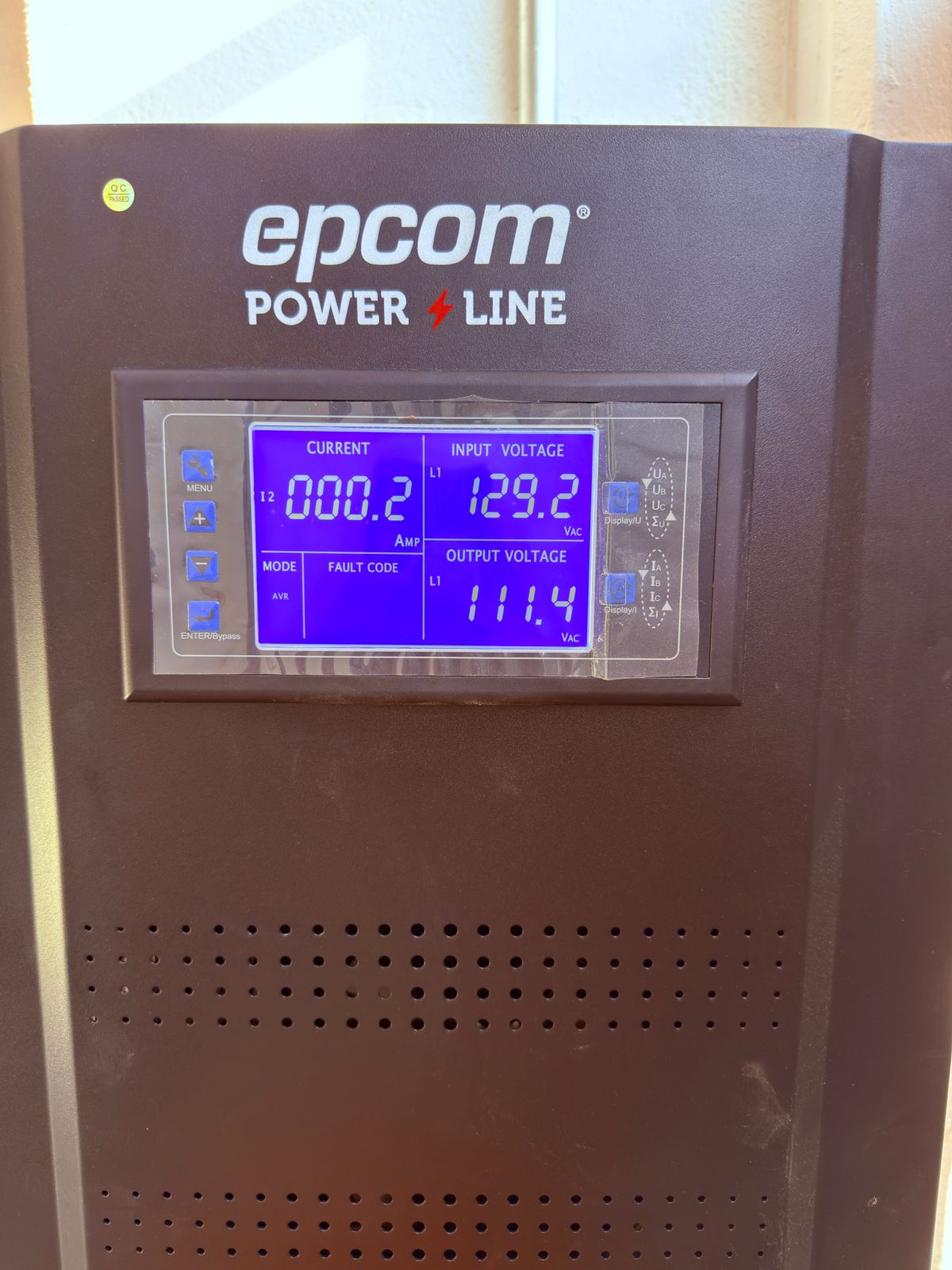
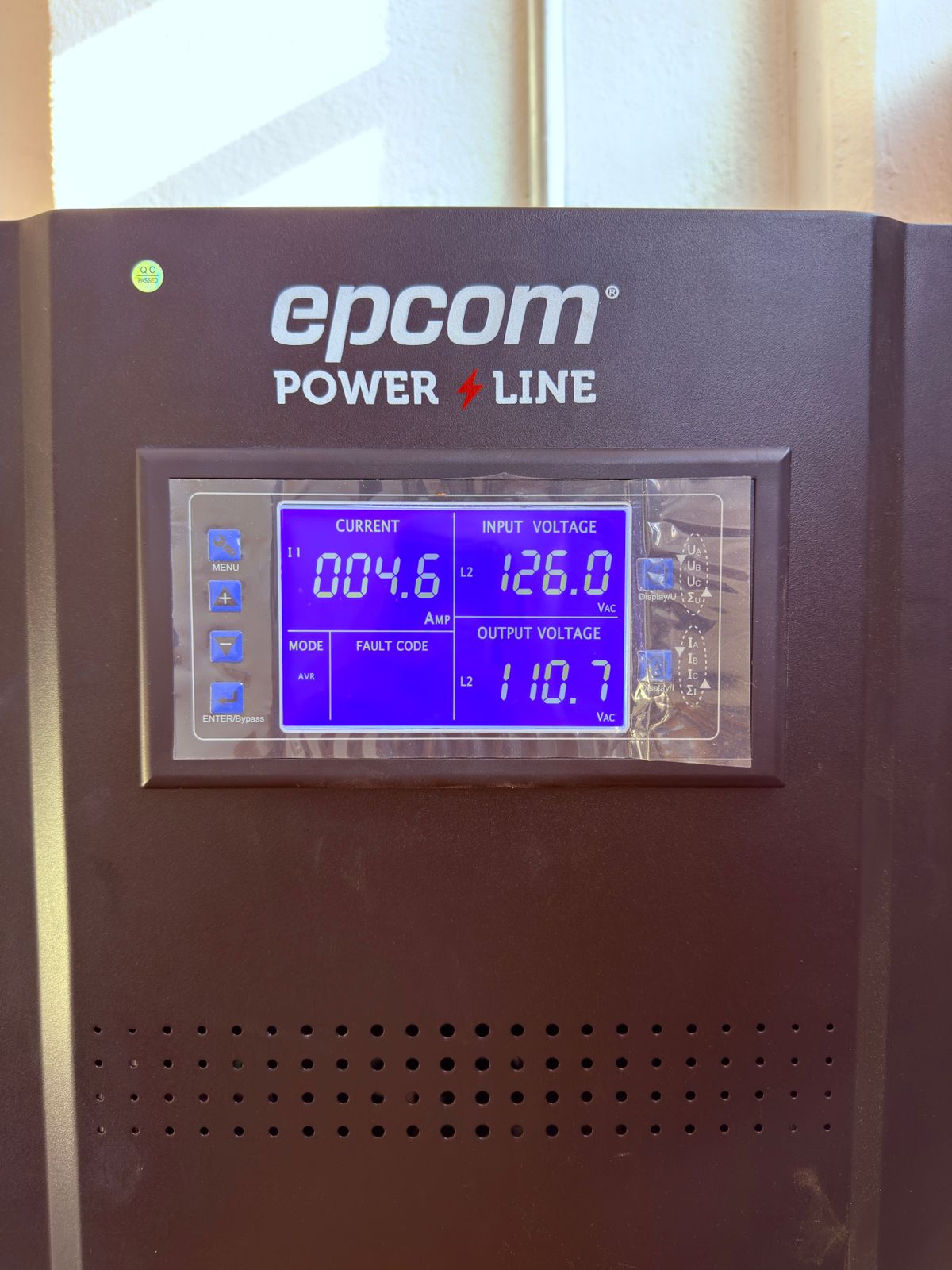
In a corporate office in Querétaro, overvoltage conditions were detected that caused air conditioning systems to enter protection mode or stop operating. Computer equipment was exposed to greater risk if the variation persisted. Proper voltage regulation stabilizes the supply, reduces risk, and protects operational continuity.
In this case, variations above the expected range were detected, with readings of approximately 129.2V and 126.0V on supply lines. Through voltage regulation, the output was stabilized to around 111.4V and 110.7V, helping protect air conditioning systems, computers and sensitive electronic equipment.
Professional solution
Implementing voltage regulation must start from a prior technical assessment. Not all circuits show the same level of variation, nor do all pieces of equipment require the same level of protection. A properly sized solution considers:
- Voltage measurement: recording the real voltage on the circuits of interest.
- Electrical diagnosis: evaluating the general state of the installation and supply quality.
- Load capacity: determining the real power of connected equipment to size the regulator.
- Type of protected equipment: identifying critical equipment — AC units, servers, computers — to prioritize protection.
- Operating voltage: verifying each unit's nominal range to define the target output.
- Regulator selection and installation: choosing the right equipment per the diagnosis and installing it correctly.
Benefits of implementing voltage regulation
- Electrical stability across critical circuits.
- Fewer intermittent equipment failures.
- Protection of air conditioning systems.
- Lower risk for computers and electronic equipment.
- Operational continuity with fewer unexpected interruptions.
- Greater reliability across the technology infrastructure.
Conclusion
Overvoltage conditions can simultaneously affect climate control systems and technology infrastructure. An air conditioner entering protection mode and computers exposed to out-of-range voltage are symptoms of the same electrical problem that can be managed with the right solution. The first step is always the assessment: measuring real voltage and understanding the installation's electrical conditions before defining any action.